Hello! You alright?
God, it’s been a while, eh? Thought I’d get back into it with some rewilding content.
Last year, I watched the new ‘Wilding’ movie by Isabella Tree, and I was so happy with it! It put a book that changed my whole view as a conservationist on the big screen, and I had a great romantic date with myself.

If you haven’t already read it and enjoy nature success stories, this is the book for you. Especially important here as it follows a UK-based story.
Here’s a quick summary so you know what I’m talking about.
Wilding
There’s a couple in Sussex who own some land with a castle on it. Very Tory I know, but their hearts are in the right place. Anyway, they farm this land, and because the soil isn’t great, and the profit margins aren’t either, they spend quite a few years struggling.
However, unlike any farmer I’m aware of before them, at least in the UK, they try something completely unheard of in the early 2000s. After countless generations of tilling the soil, sowing seeds, watering crops, all of a sudden they stop. They stop all activity and simply decide to watch what happens.
What follows is an exciting journey of surprises, as one after another new species pop up all around them and interact in unexpected ways.
Nature’s Pest Controller
One example follows a ‘weed’ known as creeping thistle. It begins to spread rapidly across the now unmanaged site, and surrounding farmers are understandably upset, as it has a very negative reputation in farming circles. This becomes one of their first major obstacles.
Under normal circumstances, landowners would spray it with herbicides. However, following their new policy of non-intervention, they decide to leave it largely alone. They come very close to caving; however, nature takes the decision out of their hands.
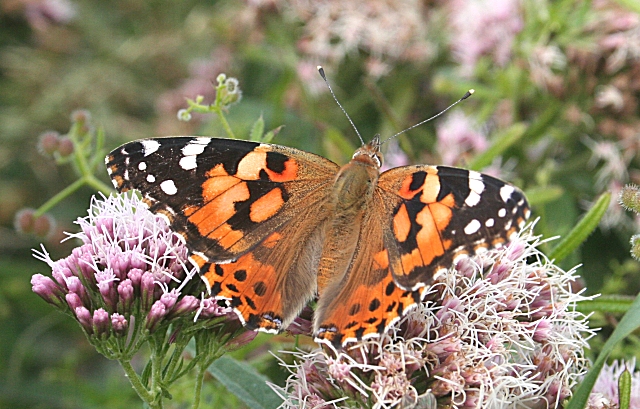
As it turns out, creeping thistle is a favored food of the painted lady butterfly. In enormous numbers, these butterflies descended and laid their eggs. After being weakened by the hordes of caterpillars, they were then eaten by horses and soon disappeared completely.
Think about this for a second. With herbicides, these weeds would have to be sprayed year after year for God knows how long. But over the space of a few months, and with the help of butterflies and horses, they are completely wiped out. No man-hours, no money. Simply sit back and trust nature to balance things. It just takes people willing to wait things out, even when they get uncomfortable.
This is just one of the many success stories. It fills you with excitement and hope as so much change happens on this relatively small piece of land in a relatively short space of time. Over the course of 15 years or so, it becomes one of the most biodiverse places in the whole of the UK, and it was a farm for Christ’s sake. We, as a country, are one of the least biodiverse in the entire world, and yet, if we were willing to commit maybe even just 5-10 years to a larger scale rewilding experiment we could be world leaders.
So, if you’re curious about rewilding (or you’re just tired of all the climate doom and gloom) this is a great introduction. Especially if you’re more of a visual/audio learner. Go treat yourself!
Photos
Painted Lady Butterfly (Cynthia cardui) by Anne Burgess is licensed under CC-BY-SA 2.0
 Scruffy Scotland
Leave a comment