Second week has come around and it’s still been really fun, which is the only reason I’m writing, really.
I spoke to some friends recently who are all very creative people, and they said some stuff that I think I needed to hear. And that is, just write for you. Don’t care about whether it’s good or not, just do it if you enjoy it. For the most part, people may not find what you are writing interesting or engaging, but as long as you enjoy it you should just do it.
So what’s been happening recently?
At the moment in Edinburgh, all the cherry blossoms are in full bloom. I have some outside my flat, and they are at the phase where the petals are falling and carpeting the ground. Mixing in shades of pink with the green grass. It’s undeniably beautiful and relaxing to watch the petals slowly fall and hear the wind blowing through them.
Continuing the theme from last week, however, people will stop and look at these trees and think ‘Wow!’. But beyond their aesthetic appearance, what purpose do they serve? I mean, of course, they will give people a hit of dopamine appreciating the beauty of nature. But these trees are not native to Scotland, they were brought here.
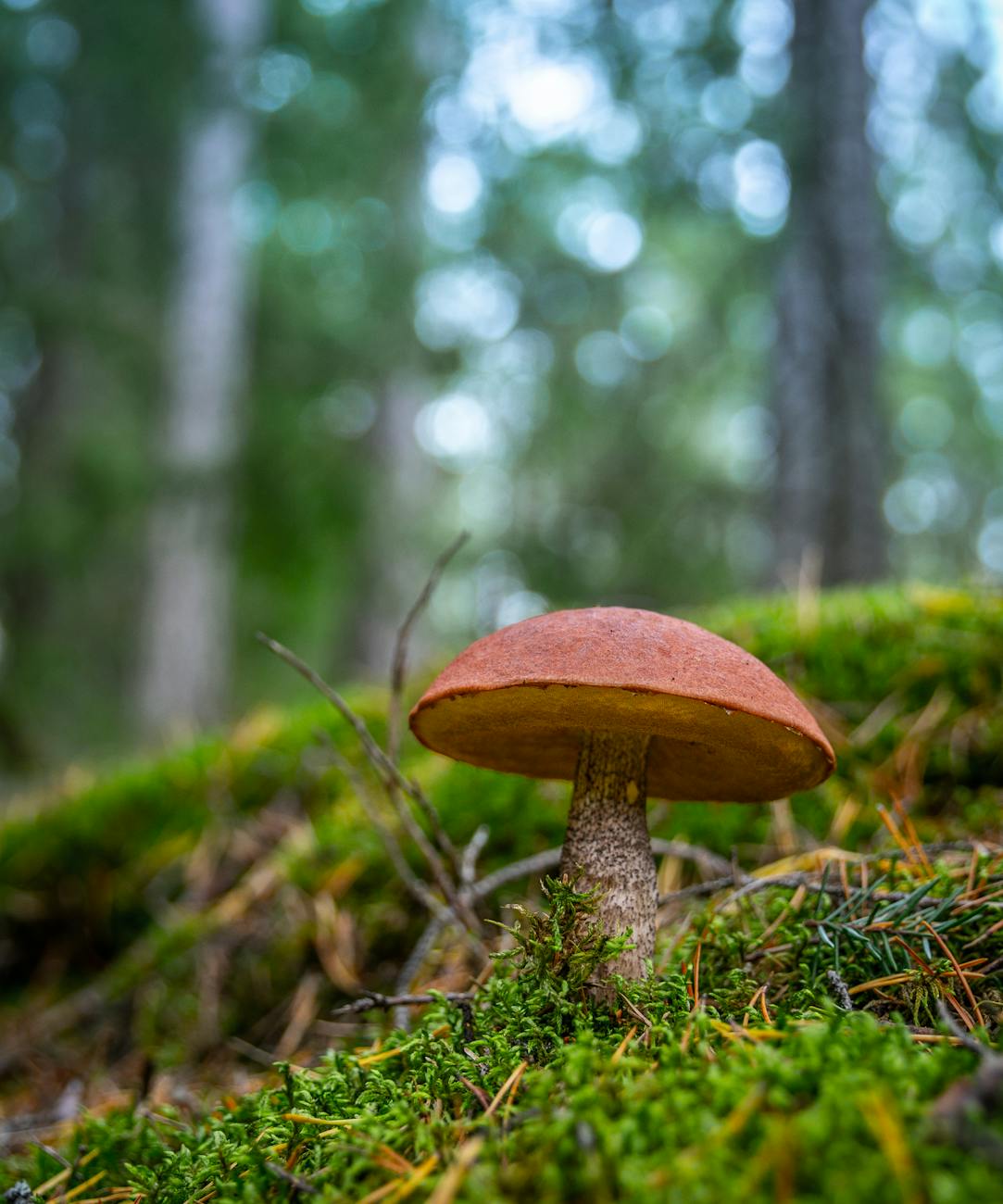
That’s why, in the coming weeks I’m going to focus on the less charismatic natural phenomena such as mushrooms, beavers, deadwood, ‘weeds’, and likely trees as well. While not stereotypically beautiful, they are fundamental to the natural world when you start to learn about them.
Every single thing in the natural world fits into a complex tapestry of organisms that, while seemingly unimportant and maybe even gross from the outside, are incredibly valuable.
Deadwood, for instance, is something that may often be overlooked and almost seen like littering on the natural world’s part. Picking it up and burning it on a campfire may often feel as if you are cleaning up the forest, freeing up all this space for other things. However, that piece of wood grew from the ground into a tree or branch using the nutrients of its surroundings. And when it eventually becomes deadwood and begins to break down, those nutrients it spent years accumulating are returned to the forest slowly over many years. When you burn it you are literally stealing potential resources from the forest, not to mention the countless species that rely on it for food and as a potential home.
An important way of looking at things which I found somewhat enlightening was the ‘rivet popper hypothesis‘.
Queue somewhat boring yet also very interesting sciency thing.
Think of an ecosystem like an airplane, and all the species in it as the nails (rivets…) keeping the wings on. There are certain nails that you can remove and it won’t appear to have much effect. However, after a certain number of nails are removed the wings will eventually fall off and the plane will crash. The scary thing is, you don’t know which specific nail will cause the wings to fall off and you don’t know how many the wing can lose before it fails. Although, when you introduce the concepts of keystones species and ecosystem engineers (I’ll explain these over the coming weeks), you can think of these as key nails in the wing, that when removed the ecosystem is almost guaranteed to crash. In this way you know what species to prioritize, but you also realize that all species should be conserved, as you don’t know how fundamental they are to an ecosystem’s stability and health until it is too late.
Anyway, start looking around you at the things you would normally ignore and when you start to think ‘someone should really clean that up’, start to ask yourself why.
Peace x
 Scruffy Scotland
Leave a comment